Lake Creek Valley Isn't One Market. It's Three Governance Models Wearing the Same Name.
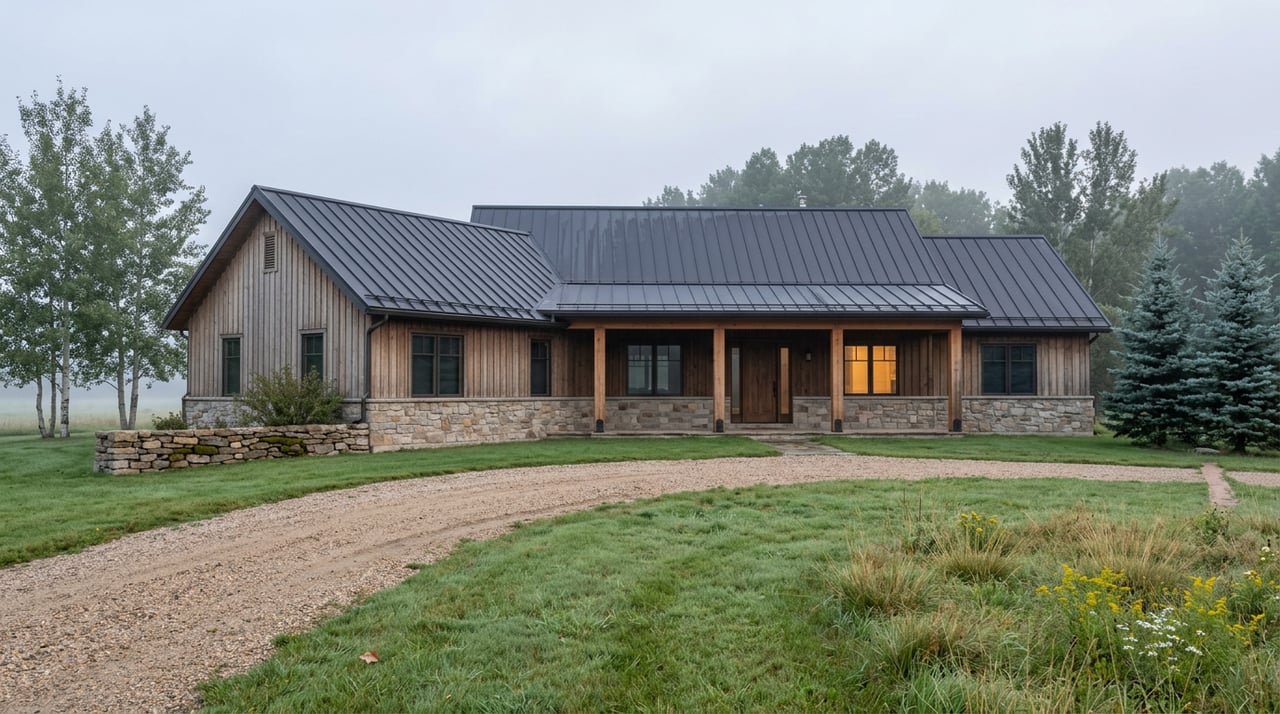
Two Lake Creek Valley properties can sit less than a mile apart, carry similar acreage, and post wildly different numbers for what it actually costs to own them each year. One listing advertises no HOA and no transfer tax, with water supplied through the Lake Creek Metro District. Another, inside the gates of Pilgrim Downs, carries a documented $31,029.76 in annual property taxes plus $19,663.02 in HOA dues, billed in four quarterly installments that run higher in fall and winter than in spring and summer. Same valley. Same mountain views. Two entirely different answers to the question a buyer actually needs answered: who is responsible for the road, the gate, and the water line, and how predictable is that bill going to be five years from now.
That's the real story in Lake Creek Valley right now. Buyers who have already spent time in Cordillera or Bachelor Gulch, where the amenity structure and the dues are packaged together and disclosed up front, tend to read "no HOA" on a Lake Creek listing as a discount. Sometimes it is. Often it's a different kind of bill, not a smaller one.
Lake Creek Valley, tucked into the narrow drainage south of Edwards, is not governed as a single entity. It contains at least three distinct ownership structures, and they get folded together under the same marketing name because the geography is continuous even when the paperwork isn't.
The two gated enclaves, Creamery Ranch and Pilgrim Downs, function the way most people picture a private mountain community: a gate, shared roads, an HOA that collects dues and maintains the common infrastructure. Lake Creek Meadows, established in 1974 as a set of 83 two- and five-acre lots, is older and ungated, but it still runs its own HOA layered on top of the broader Lake Creek Metro District, which handles water service across the valley regardless of which sub-community a property sits in.
Then there's the open acreage that sits outside all three of those HOAs entirely. These are the parcels that get marketed with the phrase "no HOA, no Transfer Tax" front and center, drawing water from the Lake Creek Metro District the same as everyone else, but with no gate, no shared road maintenance fund, and no association dues of any kind.
Three structures. One neighborhood name. A buyer scanning listings on price alone has no way to see which one they're looking at until someone reads the fine print.
A recent listing at 4.4 private acres on Lake Creek Road makes the pitch plainly: Lake Creek Metro District water, no HOA, no transfer tax, bordered by 16 acres of open space that belongs to neighboring Creamery Ranch. On paper, that reads as pure savings. No dues to budget for, no association meetings, no transfer tax bite at closing.
What that structure doesn't include is anyone else sharing the cost of the driveway, the private road connecting the parcel to the county system, or any future capital project the valley might need. In a gated HOA, those costs get pooled and billed predictably. Outside one, they land on whoever owns the property when the bill comes due, whether that's a driveway resurfacing or a shared culvert failing after spring runoff.
This is the tradeoff that doesn't show up in a listing's summary numbers. It shows up in a seller's disclosure, a title report, or a conversation with the county about who maintains what past the pavement's edge.
The Pilgrim Downs example is useful because it's documented in specific numbers rather than a general description. A property there carries $31,029.76 in 2024 property taxes and $19,663.02 in annual HOA dues on top of that. Combined, that's roughly $50,700 a year before a single utility bill or maintenance call.
What that dues figure buys isn't just a gate attendant or a paved entrance. It's a funded, professionally managed reserve for the shared road, the shared water infrastructure inside the enclave, and the kind of long-horizon capital planning that an individual owner on an ungated parcel has to handle alone or not at all. The dues number looks large in isolation. Measured against the alternative of self-funding those same obligations without a pooled reserve, it starts to look less like a premium and more like insurance with a predictable price tag.
Here's how the three structures stack up on what they actually cover:
| Structure | Examples | What's Pooled | What's Individual |
|---|---|---|---|
| Gated HOA | Creamery Ranch, Pilgrim Downs | Gate, shared roads, common infrastructure reserve | Property taxes, home maintenance |
| Ungated HOA | Lake Creek Meadows (est. 1974) | HOA-managed community standards, water via Metro District | Individual lot upkeep, no gate cost |
| No HOA | Open acreage parcels | Water via Metro District only | Private road, driveway, any shared infrastructure with neighbors |
Not every premium in Lake Creek Valley traces back to gates or dues. A creekside property on Lake Creek Road went up for sale earlier this year asking $9.5 million on just 2.76 acres, and the number wasn't driven by amenities at all. The listing broker described it as holding one of the largest private creek-frontage footprints in the area, with attached irrigation and water rights as the asset actually being priced. That's a distinct variable from governance structure entirely, and it's one that applies whether the parcel sits inside a gate or outside one.
For a buyer building a mental model of the valley, this matters because it means the price-per-acre spread you'll see across listings isn't explained by HOA status alone. A modest, ungated 4-acre parcel with senior water rights on the creek can carry a heavier price tag than a larger gated lot without direct water frontage. The governance question and the water rights question are two separate lines on the same balance sheet, and conflating them is how buyers end up surprised at the appraisal stage.
Buyers who've toured Cordillera's Ranch or Divide neighborhoods, or looked at Bachelor Gulch's ski-in enclaves, are used to a single, disclosed HOA structure with amenities bundled into the number. Lake Creek Valley asks a different question up front: which of the three governance models is this specific parcel operating under, and what does that structure make the buyer responsible for that a club community would have already absorbed.
That's not a knock on either approach. A buyer who wants predictable costs and shared infrastructure reserves is better served inside Pilgrim Downs or Creamery Ranch. A buyer who wants working-ranch acreage, direct access to the East and West Lake Creek trailheads into White River National Forest, and doesn't mind handling road and water infrastructure questions directly is often better served outside any HOA at all. Both buyers can end up in Lake Creek Valley. They should not expect to end up with comparable annual costs, comparable maintenance obligations, or comparable resale mechanics when it's time to sell.
The trailheads, worth noting, don't discriminate. Both East and West Lake Creek trailheads sit open to National Forest land regardless of which side of a gate a property falls on, which means that specific amenity isn't part of what any dues structure is actually buying.
Does "no HOA" mean lower total ownership cost in Lake Creek Valley? Not automatically. It means the individual owner absorbs road, driveway, and any shared infrastructure costs directly rather than through a pooled reserve. Whether that's cheaper depends on the condition of that specific infrastructure and how much of it there is to maintain.
What does the Lake Creek Metro District actually cover? Water service across the valley, independent of whether a given property also belongs to an HOA like Lake Creek Meadows, Creamery Ranch, or Pilgrim Downs. It's a layer beneath the HOA question, not a substitute for it.
Are Creamery Ranch and Pilgrim Downs interchangeable? Both are gated, HOA-governed communities inside Lake Creek Valley, but each carries its own dues structure and reserve fund. A buyer comparing the two should ask for the actual HOA budget and reserve study rather than assume parity based on the shared "gated" label.
Buyers weighing acreage against club amenities, or trying to read what a specific parcel's dues structure actually covers before making an offer, are exactly the conversation Ron Byrne & Associates has with clients across the Vail Valley every week. If you're comparing Lake Creek Valley against Cordillera, Bachelor Gulch, or anywhere else in the market and want the governance and cost structure explained in plain terms before you write an offer, schedule a private consultation and bring the listing sheet. We'll tell you what it actually says.



Ron Byrne & Associates offers unparalleled service and integrity ensuring a seamless home buying experience.